Lithochronometry| 2023
Lithochronometry| 2023
Three-part installation comprising Being, Written in Stone (eight-channel sound installation),
Lithochronometry (six-channel audiovisual installation), and Archive.
Presented at SoundS Master Exhibit
Collegium Hungaricum Berlin
Berlin, Germany
A thesis project investigating memory, geological time, and the entangled relations between human, machine, and more-than-human worlds.
Lithochronometry is a three-part installation comprising Being, Written in Stone, Lithochronometry, and Archive. Through sculpture, multichannel sound, moving image, and collected geological materials, the project explores how memory extends beyond the human body and becomes embedded in stone, landscape, and technological systems.
Rather than approaching stone as an inert object, the installation considers it an active participant in processes of remembering, transformation, and geological time. Drawing on field recordings from abandoned quarries, machine learning, speculative writing, and sculptural practice, the work proposes memory as a material process shared across human and more-than-human worlds. Human voices, geological formations, and computational systems become interconnected through acts of translation and transformation.
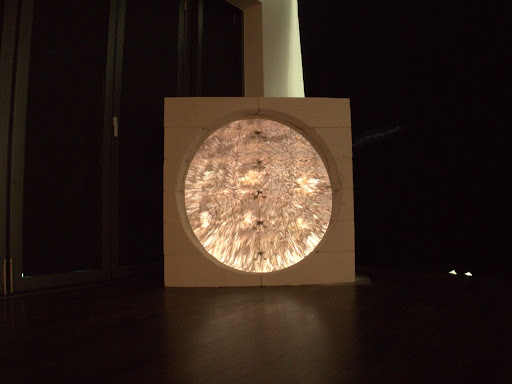
The central installation presents a six-channel audiovisual environment inside a circular YTONG sculpture whose porous material absorbs sound and shapes the acoustic space. Rather than representing geological time, the work invites visitors to experience it through listening, spatial resonance, and moving image. Across the triptych, stones function simultaneously as material, archive, and witness, proposing new ways of thinking about memory, coexistence, and the temporalities that connect human and non-human life.
Lithochronometry is a three-part installation comprising Being, Written in Stone, Lithochronometry, and Archive. Through sculpture, multichannel sound, moving image, and collected geological materials, the project explores how memory extends beyond the human body and becomes embedded in stone, landscape, and technological systems.
Rather than approaching stone as an inert object, the installation considers it an active participant in processes of remembering, transformation, and geological time. Drawing on field recordings from abandoned quarries, machine learning, speculative writing, and sculptural practice, the work proposes memory as a material process shared across human and more-than-human worlds. Human voices, geological formations, and computational systems become interconnected through acts of translation and transformation.
The central installation presents a six-channel audiovisual environment inside a circular YTONG sculpture whose porous material absorbs sound and shapes the acoustic space. Rather than representing geological time, the work invites visitors to experience it through listening, spatial resonance, and moving image. Across the triptych, stones function simultaneously as material, archive, and witness, proposing new ways of thinking about memory, coexistence, and the temporalities that connect human and non-human life.
Keywords: audio sculptures, AV sculpture, clay, stones, memory, artificial intelligence, human non-human relations, archive.
Being, Written in Stone is an eight-channel sound installation created in collaboration with Leandros Marios Basteas as part of the collective Xώma. Eight clay sculptures, each enclosing a loudspeaker, are shaped from memories of stones encountered during field research, creating a spatial composition in which every sculpture maintains its own sonic presence while contributing to a shared acoustic environment.
The voices emitted by the sculptures are transformed into stone-like resonances through machine learning trained on field recordings from abandoned quarries. Clay becomes both a metaphor for the human body and a material through which human memory, geological matter, and machine memory enter into dialogue, questioning where memory resides and how it might be shared across different forms of existence.
The voices emitted by the sculptures are transformed into stone-like resonances through machine learning trained on field recordings from abandoned quarries. Clay becomes both a metaphor for the human body and a material through which human memory, geological matter, and machine memory enter into dialogue, questioning where memory resides and how it might be shared across different forms of existence.


Lithochronometry
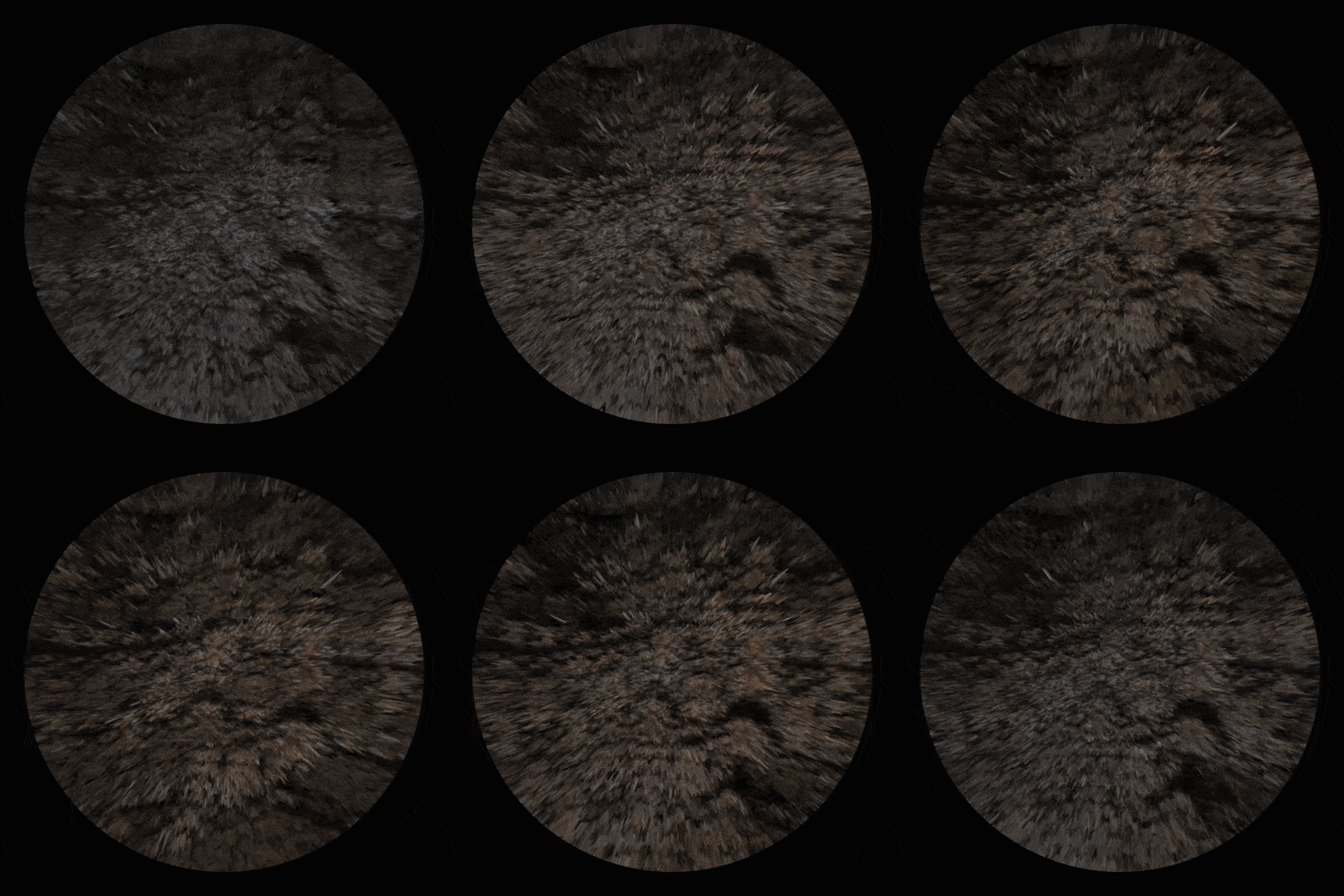
Lithochronometry is a six-channel audiovisual installation presented inside a circular YTONG sculpture. The title combines the Greek word lithos (stone) with geochronometry, shifting the measurement of geological time toward an exploration of stone as a bearer of memory rather than a passive record.
Field recordings from active and abandoned quarries are combined with AI-generated moving images trained on thousands of photographs of quarry landscapes. Spatial sound circulates through the sculptural structure while projected images continuously transform the geological surface, bringing together human intervention, machine memory, and deep time. The installation proposes listening as a way of encountering geological processes that unfold beyond the scale of human perception.

Archive
Archive assembles stones collected during fieldwork alongside printed images generated throughout the machine learning process. Rather than documenting the project, the archive becomes part of the installation itself, tracing the encounters, journeys, and transformations that shaped its development.
Each stone carries its own history while each image records a different stage in the computational interpretation of geological surfaces. Together they form a material archive in which personal memory, field research, and machine vision coexist, revealing the artistic process as an accumulation of relations rather than a linear record.
